Father Mark spoke matter-of-factly, perhaps with just a touch of resignation.
“Oh, I’ll probably die young,” he said. “My father died when he was 43. Cardiac.”
It was a Saturday afternoon in the middle of summer in the middle of the last decade. The conversation took place in the lobby of the more modern of the parish’s two churches, located a down the hill from the church-like, far older one.
This one is laid out like a sideways basketball court. Outside, on the western end of the structure, was a modern sculpture that looked a little as if a small airplane had crashed into the building.
One of the conclusions of Vatican II, as it was interpreted, seems to have been that Hell has an insufficient supply of architects. Soon there were new churches that resembled flying saucers or the Monsanto exhibit from some long-forgotten world’s fair. One that comes to mind is a stucco monstrosity in Connecticut that a friend of mine referred to as “Our Lady of Taco Bell.”
This particular church wasn’t as ghastly as the worst of them, but it didn’t — doesn’t — much resemble a church, either. Not a Catholic church, anyway, at least not one that would inspire a person to convert from whatever to Roman Catholicism, as I had done. But this church had two things to recommend it: a late afternoon Mass each day on weekends, and a parking lot. Those are the reasons I was often among the congregants at those Masses.
For some reason I never much thought about, I usually arrived early and undertook such small tasks as Father Mark, the other priests and staff, or charity called upon me to do. If it were the late Sunday Mass, at 5 p.m., there was more to do: people in the morning Mass were wont to replace the missals and hymnals sideways or upside down in the racks attached to the pews in front of them. They’d put the bulletins there, often folded creatively, or scribbled upon by their children. Sometimes the crayons were there, too.
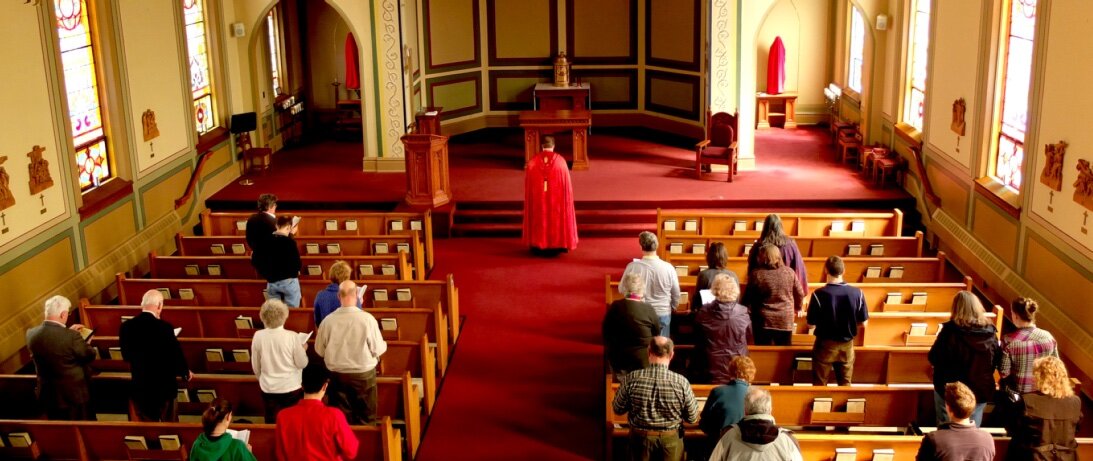
But on Saturday there had been no earlier Mass to clean up after. I don’t know why I went early, though usually it was probably because I was done with an assignment so I just headed on over. Father Mark, before he had robed, would frequently come out and sit on one of the uncomfortable benches, as modern and ill-suited to their task as the building was to its, and often we’d talk.
The conversations were casual. Other times, they seemed casual but meaning was conveyed, such as the time he mentioned that Vatican II was actually very good for the Church and that it was too bad that so many people had imposed their own incorrect interpretations instead of reading its documents, making it into their views of what the Church should be.
I remember one afternoon in particular. My closest friend was very ill with the cancer that would ultimately kill her, and I’d been trying to reconcile that fact with my and the Church’s beliefs, so I’d been reading and meditating a lot. I said to Father Mark, “I got to thinking and realized that Mary could have said ‘no.’” He raised an eyebrow and grinned the grin that everyone who knew him would have recognized, the grin that said, “Follow that, go where it leads you, that’s a fruitful path.” All he actually said, though, was “That’s right!”
He had become good friends with my friend, who was Jewish and who lived back east but visited frequently. They had even corresponded. He was among those who laughed, though more quietly than the seminarians assigned to the parish did, when during a Lenten visit the bishop commented that for health reasons he wasn’t really abstaining from anything, and she said that what he needed was a good Jewish doctor. And to give up something for Lent.
Father Mark helped me through her illness and death as if he were a family member, “father” in both the capital-F and small-f way, even though I was older than he was. When she died, he took me directly to the church and we stood in front of the sanctuary as he said several prayers and we prayed for a while, this in the early afternoon. It was not as if he had nothing else to do. That was remarkable, I thought, and my already great respect for him grew when I realized that I was not special. He was like that for everyone. He bore the weight of the parish on his shoulders yet there was no sense that it wore him down.
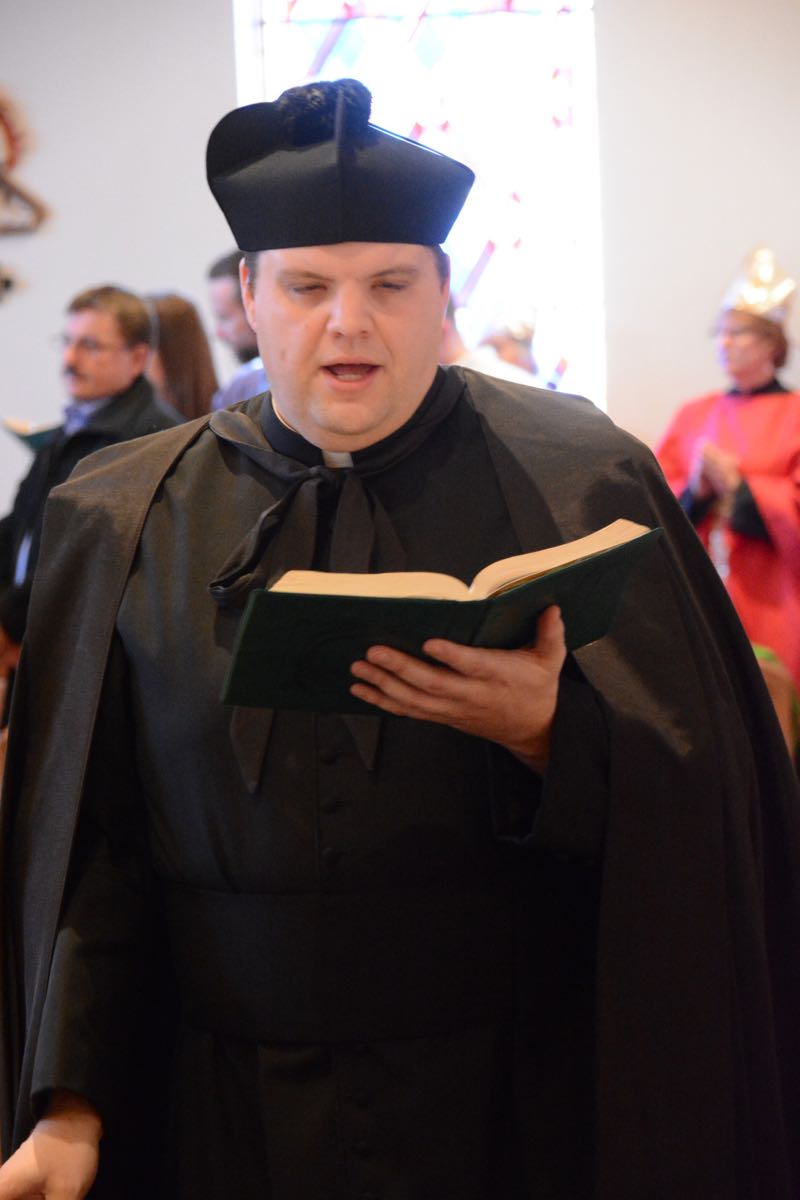
Mark Andrew Moore grew up in the small town of Ironton, an hour of hilly, curvy roads to the west. A cradle Catholic in what seems to be a Catholic village, he was brought up in St. Joseph’s Church, and went to both elementary and high school at St. Joseph’s, followed by the Pontifical College Josephinum in Columbus. There he got his bachelor’s degree in history and a master of divinity. Ordained in 2003, he received a variety of assignments in the Diocese of Steubenville. Those included teaching in Catholic elementary schools and being chaplain in a large hospital. He was thoroughly versed in joy and in anguish.
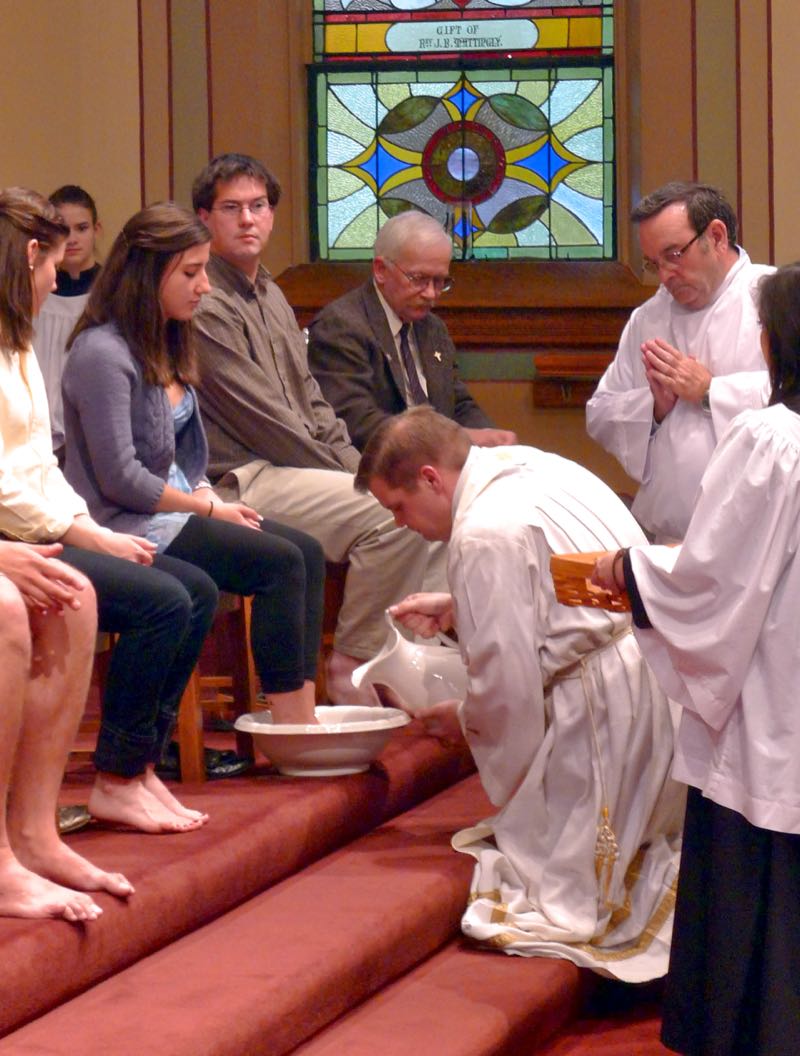
In my parish, he replaced two priests at first, then more. It’s the first time I’ve thought about it in these terms, but it’s true: when he got here there was a very liberal older priest at the modern-architecture church, and a more traditional, also old, Catholic priest at the church that looks like a church. (The former tended to go on and on during his homilies; a friend commented that he “takes the scenic route.”) They were both much-loved, holy men, but their particular congregations were distinctly different. As events unfolded, he would inherit two more churches as their priests retired or otherwise left.
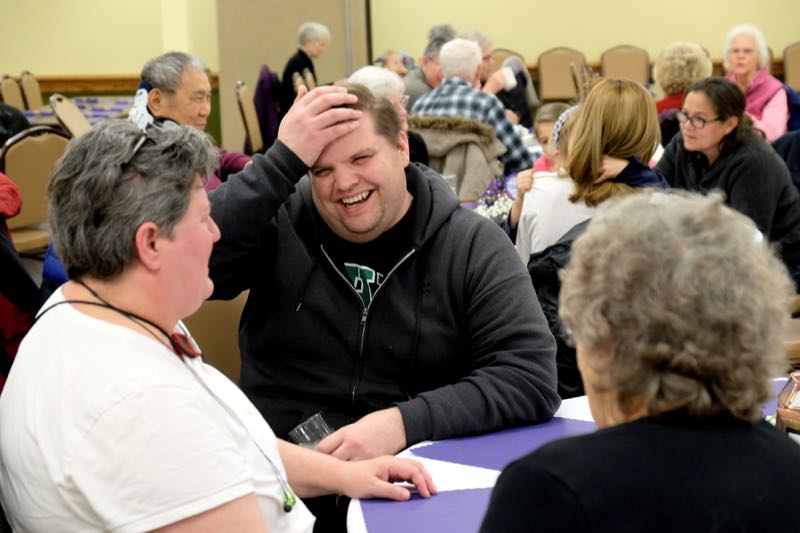
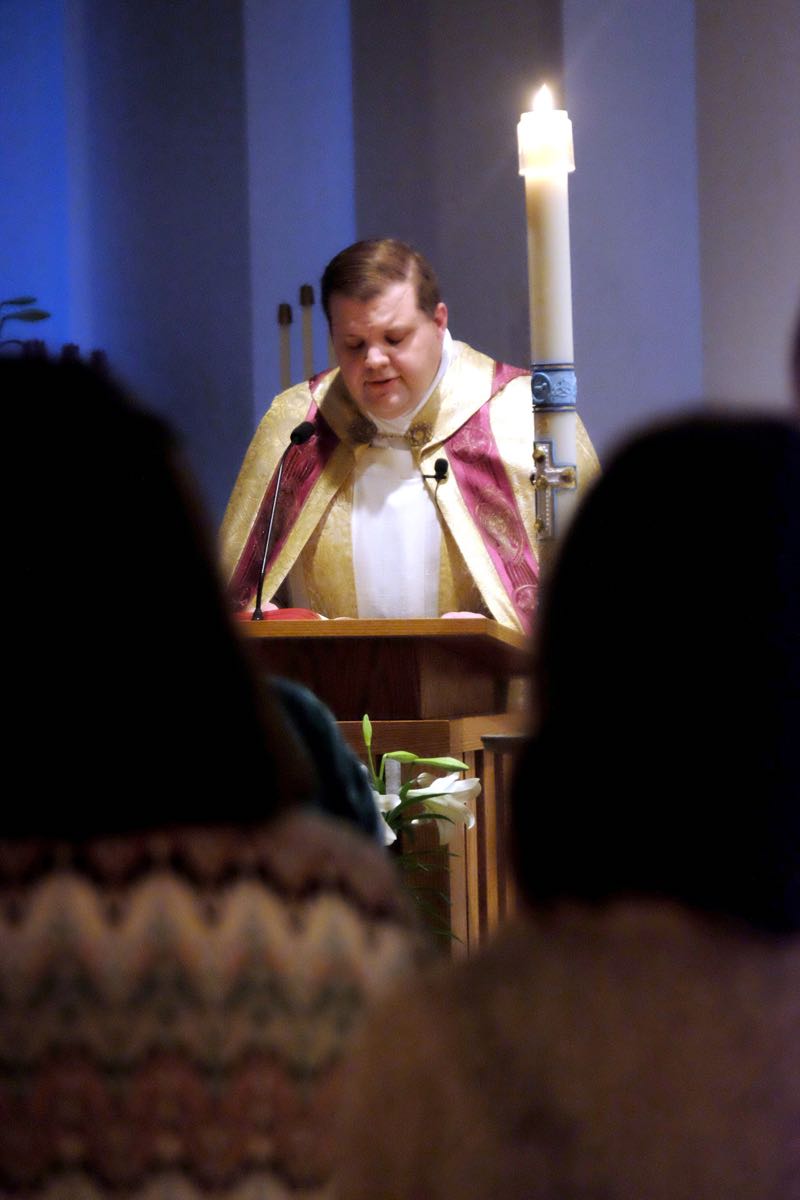
Father Mark’s homilies fit the congregations, not as to message, which was constant, but as to style. I remember — everyone does — a Pentecost homily at the Saturday afternoon Mass, which is attended by a lot of local university students. He stepped down from the ambo and walked back and forth, exhaling loudly toward the congregation. “He breathed on them. He breathed on them. Like a velociraptor!” Father Mark could get the attention even of young people who often wore gym shorts to Mass. Pentecost was later humorously mentioned as “Velociraptor Sunday.”
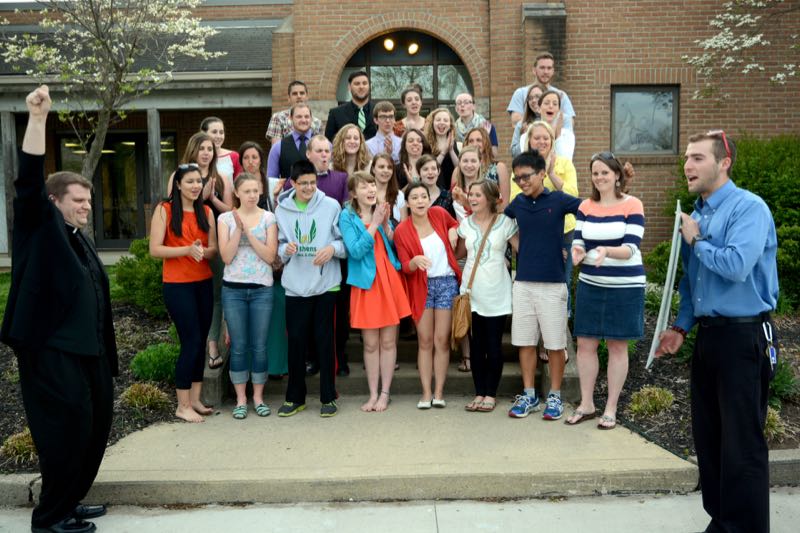
His affection for the student congregation was unbounded. Often, young people from churches where he had been in earlier years would come here to see him, to attend Mass, to show him their new babies — he had, after all, married them. He worked with young people who were considering church vocations. I knew two who considered the priesthood and one who contemplated the nun’s contemplative life. None of them followed that path; in fact, one who started off in seminary married the one who thought of becoming a nun. But married life is a holy vocation, too.
I taped a number of his homilies and sent them to my friend back east when she was hospitalized toward the end. She appreciated them and said they gave her peace. Father Mark, in turn, would remind me years after her death that he continued to pray for her.
I could go on for a hundred pages, just from memory, and still not capture all the things I remember. There are many people in the parish who could do the same thing, and more. There are many people in other places who could, too. There would be no overlap. Exceptional Catholic priests are sometimes like that.
I remember a walk around the church one day shortly after Pope Benedict XVI had gotten muscled out of the papacy by the Francis people. Though he did not speak intemperately, Father Mark was outraged. I do speak intemperately and therefore think of the gone and largely forgotten Francis as Jabba the Pope; the most severe appraisal I heard from Father Mark was something often said in the Church during those years: “We’ve survived bad popes before.” I don’t remember if it was that walk or another when Father Mark said, “I’d like five minutes with Obama. I want to ask him what he’s doing to my Church.” This was, I believe, when the government was demanding that religious orders dispense birth control drugs and devices.
While I don’t think Father Mark was especially drawn to the Traditional Latin Mass, as I am, he worked to bring that ancient and mystical service to the parish. Those of us who attended were enriched by it.
Then Pope Jabba decided to ban it. People like me were not welcome in his new, communistic version of the Church. I had to find the traditional Mass that had been embraced for hundreds of years — did all those people end up in Hell? — someplace else. No one who cared was happy about it, but that’s how Fat Frank (as more than one priest I know, though not Father Mark, called him) wanted it.
Francis is now gone to wherever he ended up. It is not yet clear how Pope Leo will turn out; he would have done the Church a great favor by lifting his predecessor’s ban on the Latin liturgy, and my thoughts of him would become more charitable if he did.
But soon the local concerns were not liturgical: Father Mark had esophageal cancer. This especially awful form of the disease was diagnosed about a year ago. I was told about it in a note from a good friend from the congregation. I hoped to see him but was told that the number of people he saw was being kept to a minimum lest he catch something that would make things worse. The church staff had largely changed and I knew few among them, so inquiry was difficult and it would have been troublesome to press the issue.
First of last week, word went out: “In recent days, Father Mark’s condition has declined significantly. He is currently in the Intensive Care Unit, and his medical team believes he may have only hours to days remaining in this earthly life.”
Last Wednesday, as the sun rose on a spectacularly beautiful day, Father Mark died.
It has been a week, and I don’t think a minute has passed that thoughts of him and his extraordinary priesthood have been entirely absent from my consciousness. So many Masses. So many conversations. He was a great priest and an excellent human being. Though I hadn’t seen him for a while, his absence is palpable anyway.
His funeral is Friday and, because of the vast number of lives he touched and guided even in this small town, it will have to be piped into more than one church. There have been and will be memorial Mass said for him in other churches as well.
Even if you didn’t know him, in which case you have my sympathy, you might want to say a prayer for him. He is surely doing all he can to intercede for you.
Father Mark was 49 years old. 
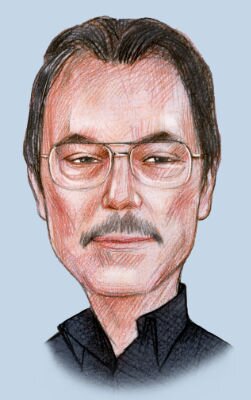
Dennis E. Powell is crackpot-at-large at Open for Business. Powell was a reporter in New York and elsewhere before moving to Ohio, where he has (mostly) recovered. You can reach him at dep@drippingwithirony.com.
Pass along this article.
Never Miss Another Article from Dennis E. Powell.
You need to be logged in if you wish to comment on this article. Sign in or sign up here.

Start the Conversation