When the numerous officials in the current administration are put on trial (and, one hopes, convicted and subjected to draconian punishments), their pre-trial fears ought to include that the jury that will judge them is made up of coffee drinkers.
Like many things and more than most, the price of coffee was increased a great deal through the gibbering faded-orange man’s international extortion through tariffs. Before Trumpianism took hold, it was possible to get excellent coffee at a cheap price. (I am, of course, talking about coffee for drinking rather than coffee for showing off. I do not care what happens to people who purchase coffee from Starbucks, beyond hoping for their finding dead bugs at the bottom of their cups, which would be hilarious.)
We’ll not get into the trendy roast-it-yourself folks, who when successful are of the Starbucks ilk. The word “artisan” when applied to foodstuffs has come to mean “not fit for consumption, but you have to compliment it anyway.” People who roast their own coffee want to be thought of as artisans, and by that description they usually are.
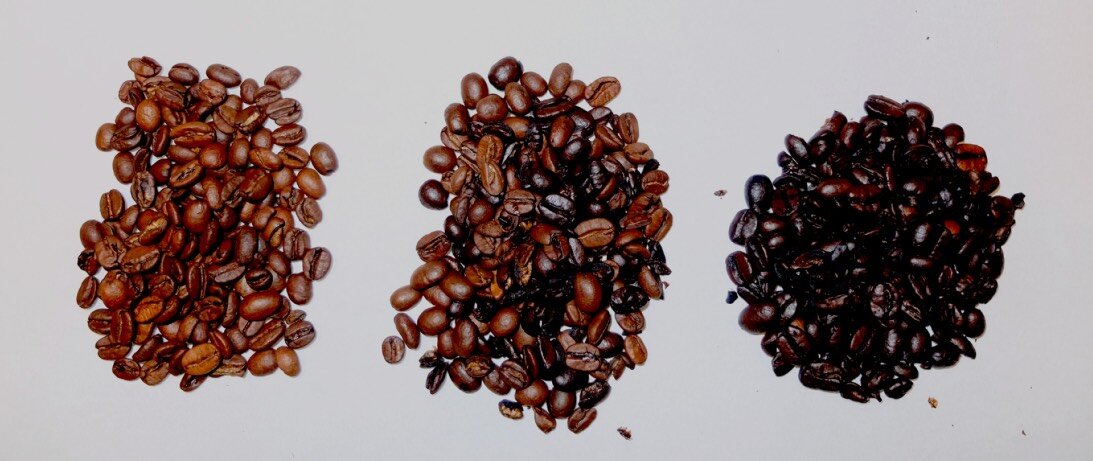
For a long time I drank French roast coffee purchased in bulk from the Porto Rico Importing Company in New York. It has become insanely expensive. (Really, all coffee has, but this is above and beyond.) Even before pumpkin man’s “liberation day,” I had mostly gravitated to Peet’s Major Dickason’s Blend, which I now see is more expensive than Porto Rico’s beans. (I don’t think that this has always been the case, and I’ve never paid anything close to $20 per pound for it.) When I first got it, it appeared to be a mixture of dry brown and black oily beans. I would order it in great big bags. It was wonderful.
It has changed. Now the beans are all the same color, it doesn’t taste the same to me, and it has gotten, as noted, expensive. I suspect but cannot prove that there may be counterfeit versions out there, or else it isn’t all that good anymore.
What’s to be done?
One of the longtime standard brands, not just standard as to coffee but as to brands overall, was A&P’s “Eight O’Clock.” Alas, A&P went out of business a decade ago, and the brand has since been passed around like that one cheerleader — you know who I’m talking about — in high school. It would be good to have the original to compare it with, but we don’t. Anyway, it can be thought of as a fairly reliable standard coffee, and it is what I used for what turned out to be a successful experiment.
What I did was this: mix a bag or plain brown coffee with a bag of the brand’s espresso coffee. Then I ground it together and made coffee. It tasted the way Peet’s Major Dickason’s used to taste. And it was much cheaper.
It runs counter to what one would guess, but dark-roasted coffee actually delivers less caffeine than the standard brown stuff does. Yet it delivers more flavor. So mixing the two may make you feel a little less jittery than drinking ordinary brown coffee, because with the stronger taste you might drink less. (This is a guess. I drink a lot of coffee either way.)
Having arrived at good-tasting coffee at a reasonable (by Trumpian standards) price, how are we to make it?
First, grind your own. Don’t argue with me, just do it. And use a proper grinder, which is to say not one of the $20 ones with a spinning blade. If that’s the grinder you have, grind it for a very long time, because to make the grind anything close to consistent it needs to be ground to virtual dust. One of the advantages of mixing the two different coffees is that the more lightly roasted variety makes it easier for the water to pass through even a fine grind. Oily black coffee by itself has an almost clay-like aspect — it can virtually seal the filter if it is finely ground, but intermingled brown coffee reduces that problem.
A burr-type grinder is better, more expensive, and lasts forever. The old family crank grinder is not the best idea unless you want castoff spider skins in your coffee. I haven’t tried those, nor coffee that has been ejected from the back ends of goats, and I don’t plan on it.
Anyone who knows me would be unsurprised to find that I have a kitchen cabinet devoted to various coffee makers. I had forgotten how many I have and would be none the worse for my ignorance but for the one I’d used for a while having over the weekend begun to produce bad-tasting coffee. It being nearly impossible to thoroughly clean, I looked in the cabinet for something else that would work — probably a machine that worked just fine until I replaced it with some super-gizmo coffee machine that soon proved its lack of worth.
(I’m thinking now of the awful thing that promised to produce a fresh, hot pot of coffee each day without much assistance from me. I was to fill the hopper with coffee beans once a week or so, and the big plastic void with water, and set the timer. At the appropriate time, before I awakened, it would grind the coffee beans, shovel them into the place where the hot water would come through, heat the water, send it through the grounds, and coffee unsurpassed in its taste and freshness would drizzle into the coffee pot below. The thing produced steam, which spread all through the machine including the hopper that held the un-ground beans. Within a week I had concluded that calling it a coffee maker was a ploy to keep it from being seized at the border by customs inspectors, because its clear purpose was as an incubator for various fungi, some of which are illegal. Though it might have been early research toward that awful-sounding mushroom-flavored coffee that the former Doogie Howser was on television trying to sell. Haven’t seen him doing that lately. Don’t know why. Maybe mushroom coffee is as terrible as it sounds.)
After inspecting the collection, I dragged out the oldest of the bunch: a Melitta coffee maker comprising a glass pot and a plastic cone that sits atop it. I grind the coffee using a coffee grinder, pour it into a triangular coffee filter, put the coffee and filter into the cone atop the pot, and add hot water obtained elsewhere. This slightly more complicated procedure produces perfect coffee with only a little inconvenience. The Melitta pot-and-cone, with a few filters, cost about $15 in, I think, 1974. (They’re $25* now.*) The filters are available anywhere — though in a smaller size than I like; the correct number 6 ones are rare.
The problem with the Melitta system is that it requires too much attention. You heat the water separately, then must stand there dribbling it over the grounds, stirring them occasionally. Doing this right after you get up in the morning, before you’ve had any . . . coffee? Forget it.
If you want, you can look at the YouTube coffee weenies, who will try out thousand-dollar coffee makers. These are something to brag about to your Starbucks-drinking friends, I guess. To me, coffee is a wonderful, invigorating beverage but not a religion.
Having established that the Melitta thing does the job satisfactorily, we know that automating the process requires only heating the water and delivering it to the grounds. For this I now employ a coffee maker I purchased at a Menards for $15. It heats the water which when hot drips out of a pipe over the grounds. That’s it. For a few extra dollars I could have gotten one with an inexplicable timer whose chief job is to blink “12:00” whenever there’s a power glitch and thereafter. Hell with that.
Though the timer issue does raise a good point: it’s wise to keep some coffee, a pot’s worth, already ground in a glass container in the freezer. Then, if the power goes out for any length of time you can face the problem fortified with coffee, made with the Melitta, which you should get one of anyway. (Unless you grind your coffee by hand, in which case you probably drink chicory anyway.)
Anytime I think of coffee for any length of time, I think of something George Hollingsworth once said to me. Among his other notable feats, he manned the emergency room overnight at Boone County Hospital. One night I’d stepped outside at the radio station where I worked and a moth flew into my ear and then began banging away with its wings. It was uncomfortable and loud.
I got on my motorcycle and drove the 20 miles to Columbia and the hospital. I explained to George what had happened. “Good thing it wasn’t a beetle or a roach,” he said as he extracted the wayward insect. “They come out in pieces.”
He invited me to stick around for a cup of coffee, which I did — time with George was never wasted. “I always liked your dad,” he said. “Gene Powell liked strong coffee.”
By pure coincidence, today is my father’s birthday.
Had he lived, my dad would be older than anyone not mentioned by name in the Old Testament. 

Dennis E. Powell is crackpot-at-large at Open for Business. Powell was a reporter in New York and elsewhere before moving to Ohio, where he has (mostly) recovered. You can reach him at dep@drippingwithirony.com.
Pass along this article.
Never Miss Another Article from Dennis E. Powell.
You need to be logged in if you wish to comment on this article. Sign in or sign up here.

Start the Conversation