
A long time ago I was assigned the task of tracking down a guy named Guido Franch, who had some pills or pellets or something that he said would turn water into gasoline.
Congress maybe wanted to emulate him but got the story backwards. Congress came up with a way to turn gasoline into water. Then they made using it a legal requirement.
Let’s first be done with Guido; my story with him is funny. I spent days looking for him. He was in the Chicago area someplace. After a couple of days of failure, I had a brilliant idea. Guido Franch, it seemed to me, was the kind of story that would appeal to legendary columnist Mike Royko. So I phoned him at his desk at the Chicago Daily News and told him what I knew. He growled and slammed down the phone. It hadn’t occurred to me that he could easily find bigger swindlers than Guido without having to leave the Cook County Courthouse.
He never covered Congress. That would have been an overload.
Congress puts Guido Franch to shame. That’s because while Guido tried to get investors in a company he said would market his magic gas beans (yes, there is some evidence of the relation between beans and gas), the members of Congress in exchange for money and support forced all gasoline sold in the U.S. to contain a substance that would turn gasoline into water.
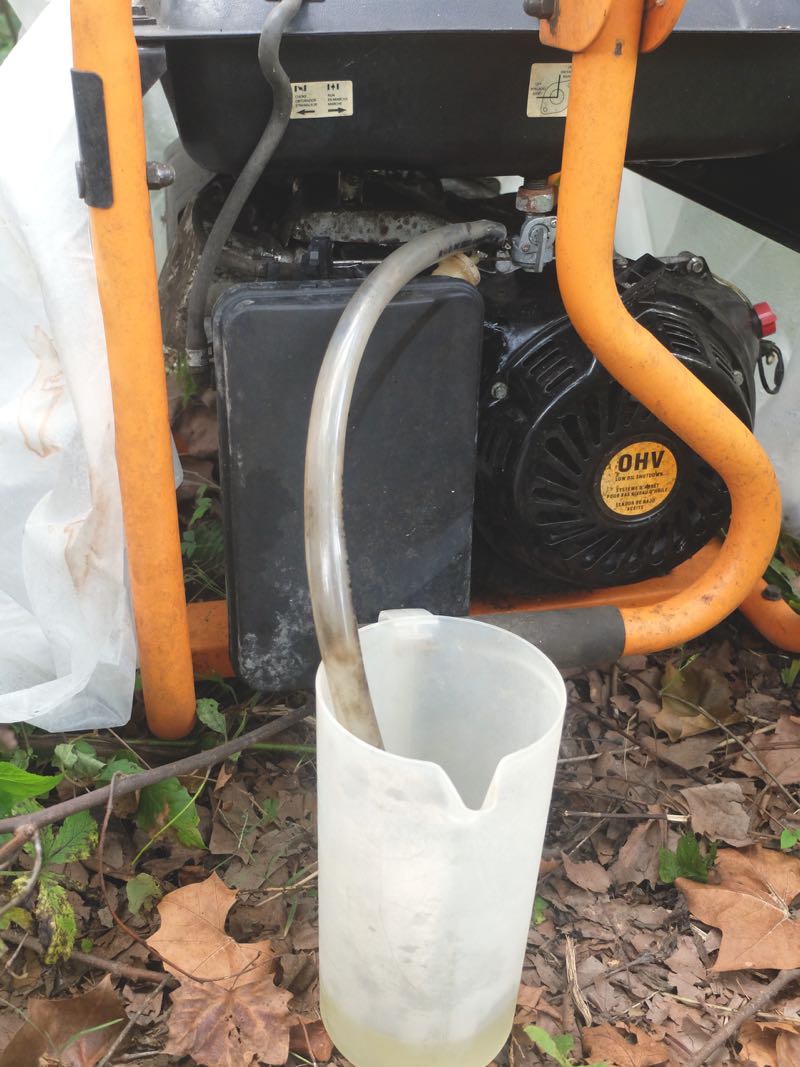
During a blackout a few weeks ago I discovered that for the first time in the 14 years I’ve owned it my backup generator wouldn’t start. It had never required more than two pulls on the recoil starter before. No, no number of pulls would cause it to roar — the appropriate word; it’s overly loud — to life.
This, I discovered, was because my generator won’t run on water, or as I have come to call it, “Bacon grease.” This is in honor of U.S. Rep. Don Bacon, a Nebraska Republican who is in his final term. I had agreed with him on just about everything until I saw that he was the leading supporter of a bill that would cause gasoline to turn into even more water.
“We have some Republicans who hate E15 for the wrong reasons,” he said. The bill he supported would allow the amount of corn liquor in gasoline to jump by 50 percent, from 10 to 15 percent. That would be good for big agribusiness and small-engine mechanics but not good for anyone else, except for congressional candidates who receive campaign cash from big agribusinesses. (Not so much from small-engine mechanics.)
The right reason to hate E15, as well as E10 and E entirely, is that it does nothing good and does a great deal of harm.
People in the spring discover that their lawn mowers won’t start and, looking inside, that the bottom of the gas tanks are covered in rust, even though they’re covered with what it erroneously thought to be gasoline.. In the winter, they get the same surprise with their snowblowers.
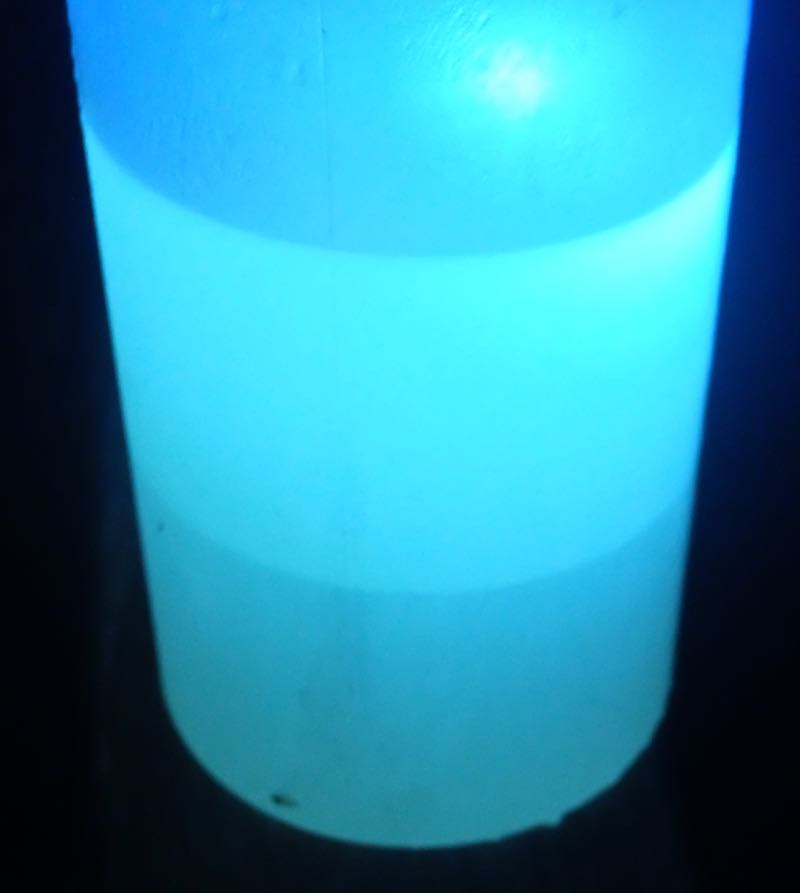
Ethanol, which is literally the active ingredient in corn liquor, is hygroscopic. It draws water out of the humidity in air. That water condenses in gasoline that contains ethanol, the more ethanol the more water. Water is heavier than gasoline, so it sinks to the bottom of the gas tank. The bottom of the gas tank is where the outlet to the engine is. It is also where, thanks to the water, the rust forms.
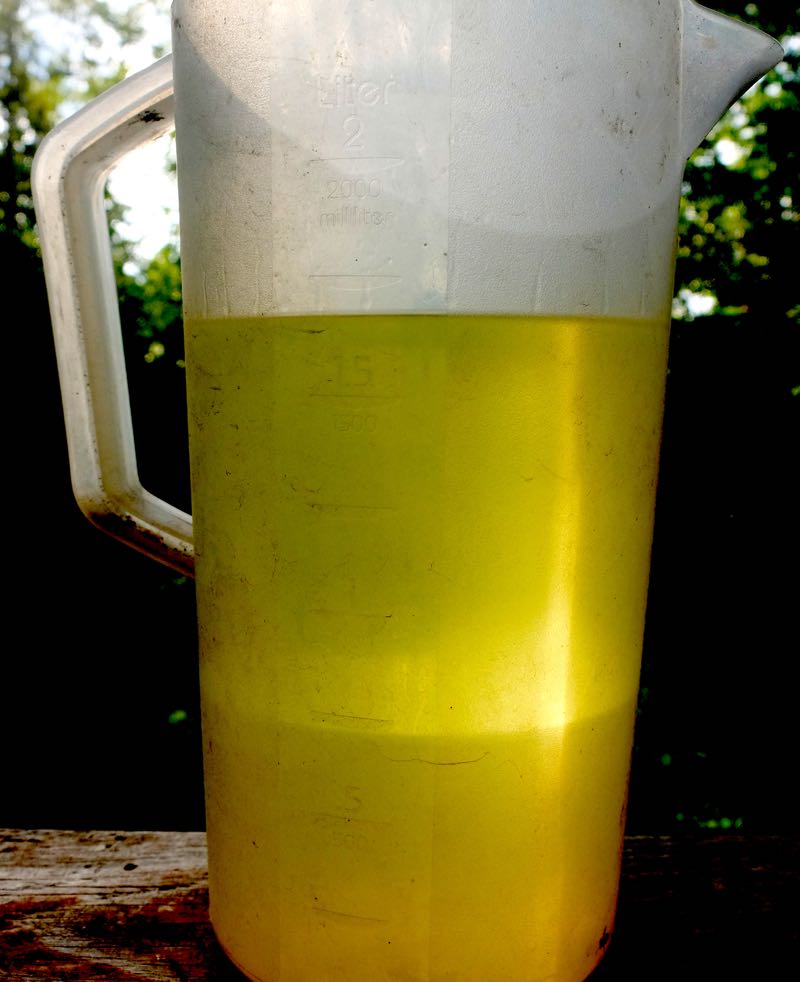
How much water? A lot. If you look at the pictures here, you’ll see how much gathered in the 5-gallon tank of my emergency generator since last fall. Yes, that’s a lot of water. When an attempt is made to start the engine, it’s water, not gasoline, that is drawn into the carburetor and then the cylinder. If the tank isn’t drained and the water replaced with gasoline, two things will happen: You’ll give up, because no matter how much you try to start the engine it will never burn gasoline. And that water will rust everything in its path: tank, carburetor, cylinder, and so on. If you don’t get rid of the water pronto, the machine will need complicated and, unless you do it yourself (and maybe even then), expensive repairs.
What’s more, sulfur in the gas, now exposed to water, forms sulfuric acid, which draws even more water from the air and is even more corrosive than water alone.
Your tax dollars at work!
That’s why the makers of gas-powered tools dictate in their owners manuals that gasoline without ethanol at all is preferred, that if you must you can use gas with up to 10 percent ethanol, and that under no circumstances can you use gas with more than 10 percent ethanol. Such as, say, E15 — 15 percent ethanol.
There’s more: If you use gasoline with ethanol — as is required by federal law mandated by Congressional prostitution — you must change it every couple of months. Get rid of the tank-full and replace it with a new tank-full.
So, thanks to the every day low gas prices forced upon us by Donald J. Trump, who has never done a lick of work in his life and who doesn’t think through the wars he starts, people who do use gas-powered tools for work, especially for emergencies, are forced to put $10-$25 of new gas into their machines every couple of months, year-round, for no reason other than corn-belt Congressional representatives with their hands out forcing us to buy bad gasoline, known in the industry as “crap gasoline.”
Nor does it stop there. What do you do with gasoline that has gone rotten? You can do something that is illegal and environmentally very unsound or you can take it to a place that disposes of the stuff — at up to $10 per gallon. (It can’t be recycled; it can only be incinerated at very high heat. There’s a point at which ethanol-adulterated gasoline won’t even burn by itself.)
There are companies that make what they call fuel stabilizers or, as they’re called in the industry, “snake oil.” Their positive effect is marginal.
Real gasoline, properly stored, will last much longer than the Bacon grease variety, though it will not last forever. Still, you’re far better off with unadulterated, real, ethanol-free gas.
The problem with that is that in many places, ethanol-free gasoline is very expensive. In many parts of the country it can be purchased only in cans such as are used to sell paint thinner, in the same places that sell paint thinner and auto parts. I have heard reliable reports of it costing as much as $30 per gallon. Which machinery owners, calculating the cost of not using it, are willing to pay.
Fortunately, in some parts of the country you don’t have to pay that much. Here, I recently found that my heating fuel company sells it, from a pump, for a little under $6 a gallon. That means it costs $30 to fill my generator and a lot to fill even the lawn mower, but I don’t go through a lot of gas over a year with those machines. And it’s a lot cheaper than fixing them if I don’t.
I’ve found another solution, not entirely cheap and convenient but a huge improvement over corn-belt gasoline. I’ll get into it here in a week or two.
No, it does not involve magic beans that turn water (back) into gasoline. 

Dennis E. Powell is crackpot-at-large at Open for Business. Powell was a reporter in New York and elsewhere before moving to Ohio, where he has (mostly) recovered.
Pass along this article.
Never Miss Another Article from Dennis E. Powell.
You need to be logged in if you wish to comment on this article. Sign in or sign up here.


Start the Conversation